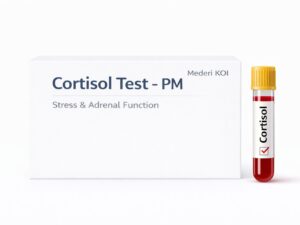

When is a Cortisol Total test ordered?
A Cortisol Total test may be ordered in the following situations:
- Evaluation of Adrenal Function: The test is commonly ordered to assess adrenal gland function, especially in patients with suspected adrenal insufficiency or adrenal disorders. It helps determine the overall cortisol production and its circadian rhythm.
- Diagnosis of Cushing’s Syndrome: Cushing’s syndrome is a condition characterized by excessive cortisol production. The Cortisol Total test can aid in the diagnosis of Cushing’s syndrome by measuring the total cortisol level in the blood.
- Evaluation of Stress Response: In some cases, the Cortisol Total test may be ordered to evaluate the body’s response to stress. It can help assess whether cortisol levels are within the expected range during stressful situations or if there is an abnormal response.
What does a Cortisol Total blood test check for?
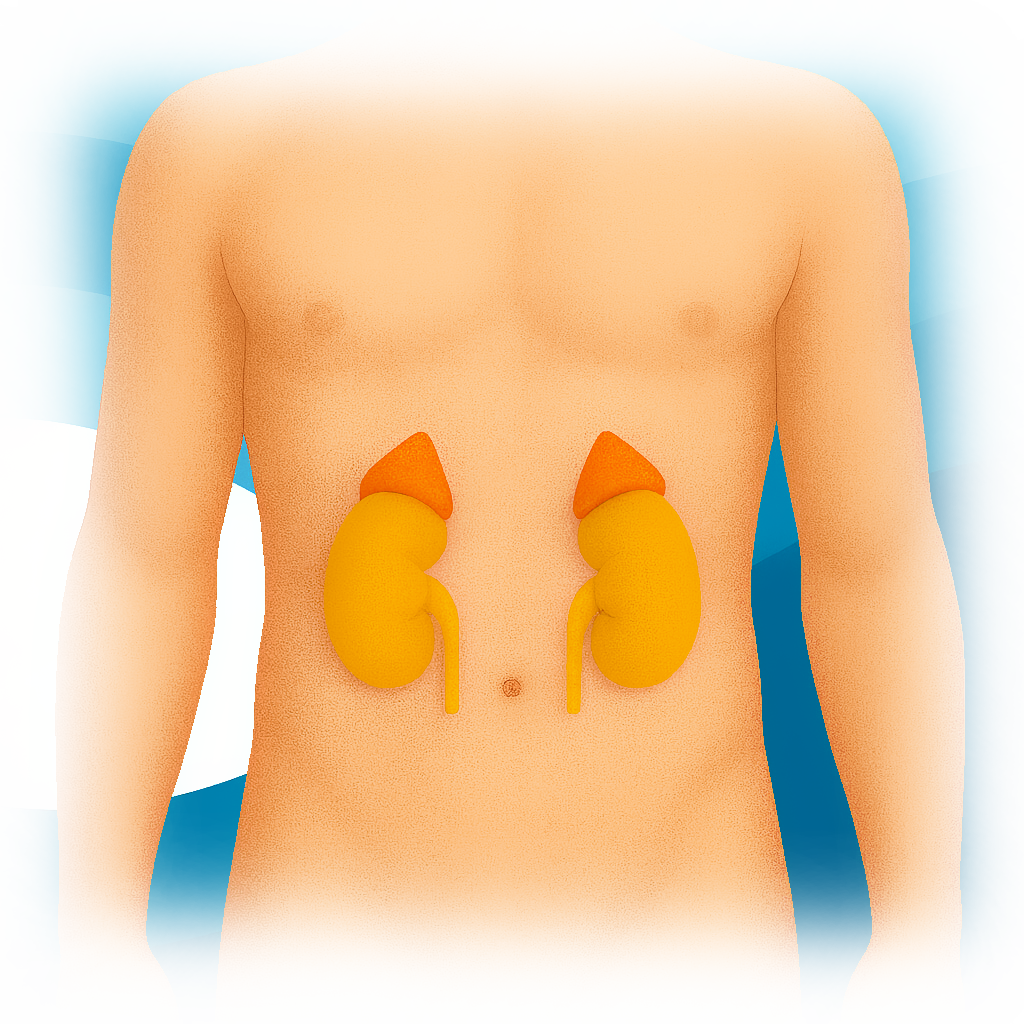 Cortisol is a hormone that plays a function in protein, lipid, and carbohydrate metabolism. It has an effect on blood glucose levels, blood pressure, and immune system regulation. Only a small fraction of cortisol in the blood is “free” and biologically active; the majority is attached to a protein. Cortisol is a hormone that is produced into the urine and found in the saliva. This test determines how much cortisol is present in the blood, urine, or saliva.
Cortisol levels in the blood usually rise and fall in a pattern known as “diurnal variation.” It reaches its highest point early in the morning, then gradually decreases over the day, reaching its lowest point around midnight. When a person works irregular shifts and sleeps at different times of the day, this rhythm might fluctuate, and it can be disrupted when a disease or condition inhibits or stimulates cortisol production.
The adrenal glands, two triangle organs that sit on top of the kidneys, generate and emit cortisol. The hypothalamus in the brain and the pituitary gland, a small organ below the brain, control the hormone’s production. The hypothalamus produces corticotropin-releasing hormone when blood cortisol levels drop, which tells the pituitary gland to create ACTH. The adrenal glands are stimulated by ACTH to generate and release cortisol. The brain, pituitary, and adrenal glands must all be operating properly in order to produce enough levels of cortisol.
Cushing syndrome is a collection of signs and symptoms associated with an unusually high cortisol level. Cortisol production may be increased as a result of:
- Large doses of glucocorticosteroid hormones are given to treat a range of ailments, including autoimmune illness and certain cancers.
- Tumors that produce ACTH in the pituitary gland and/or other regions of the body.
- Cortisol production by the adrenal glands is increased as a result of a tumor or abnormal expansion of adrenal tissues.
Rarely, CRH-producing malignancies in various regions of the body.
Cortisol production may be reduced as a result of:
- Secondary adrenal insufficiency is caused by an underactive pituitary gland or a pituitary gland tumor that prevents ACTH production.
- Primary adrenal insufficiency, often known as Addison disease, is characterized by underactive or injured adrenal glands that limit cortisol production.
After quitting glucocorticosteroid hormone medication, especially if it was abruptly stopped after a long time of use.