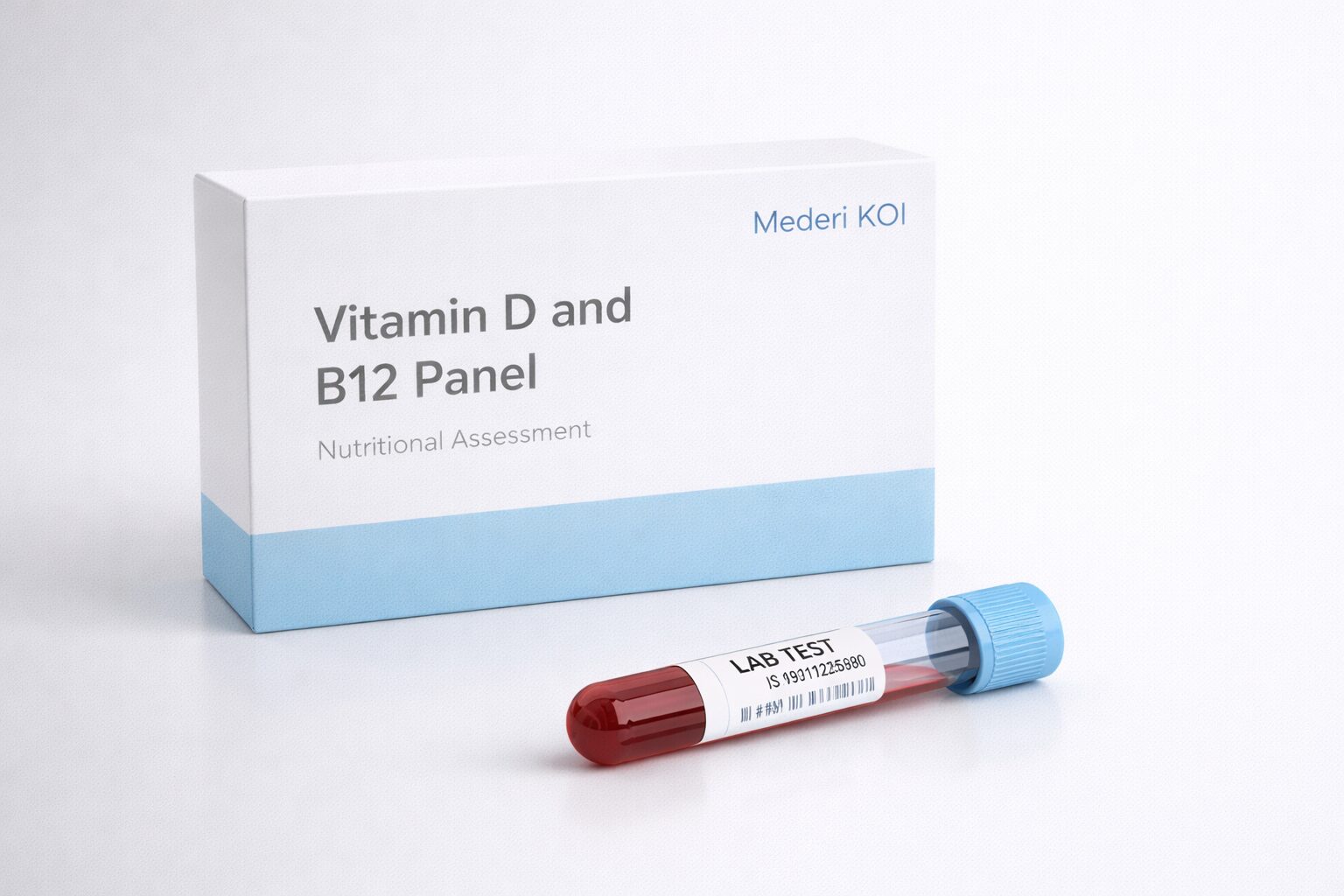
When and Why a Vitamin D and B12 Panel Test May Be Ordered
A healthcare provider might order this test in the following scenarios:
- Symptomatic Presentation: When a patient presents with symptoms suggestive of vitamin D or B12 deficiency.
- Bone Health: If there’s suspicion of osteoporosis or other bone disorders, testing for vitamin D levels can be crucial.
- Gastrointestinal Conditions: Diseases like celiac, Crohn’s, or atrophic gastritis can affect the absorption of these vitamins.
- Dietary Habits: Individuals who follow a strict vegan diet might not get enough vitamin B12, as it’s primarily found in animal products. Similarly, those with limited sun exposure might have vitamin D deficiencies.
- Routine Check-up: As a part of general health screening, especially for the elderly or those with known risk factors for deficiencies.
What the Vitamin D and B12 Panel Test Checks For
 Vitamin D, 25-Hydroxy Total measures the total amount of vitamin D in the blood from all sources. This includes both vitamin D2 (ergocalciferol), obtained mainly from plant-based foods and fortified products, and vitamin D3 (cholecalciferol), produced in the skin from sunlight and found in animal sources. Because both forms are converted in the liver to 25-hydroxyvitamin D, this test is considered the best indicator of overall vitamin D status. Adequate levels are essential for calcium absorption, bone strength, muscle function, and immune health, while low levels may suggest deficiency or impaired metabolism.
Vitamin D2 (Ergocalciferol) is the plant-derived form of vitamin D. Measuring D2 helps identify how much vitamin D comes from dietary or supplemental sources containing ergocalciferol. Tracking this fraction can be useful for patients taking prescription vitamin D2 supplements or consuming fortified foods, since D2 contributes to total vitamin D but is often less potent and shorter-acting in the body compared to D3.
Vitamin D3 (Cholecalciferol) is the form of vitamin D produced naturally in the skin in response to sunlight and obtained from animal-based foods or D3 supplements. Measuring D3 provides insight into how much vitamin D the body is generating endogenously or from D3-containing supplements. Together, the separate D2 and D3 results help clarify whether low total vitamin D levels are due to limited sun exposure, dietary intake, or issues with absorption or metabolism.
 Vitamin B12 (Cobalamin) measures the concentration of vitamin B12 in the blood, a nutrient essential for red blood cell formation, neurological function, and DNA synthesis. Low B12 levels can lead to anemia, fatigue, numbness, or cognitive changes, while elevated levels may occur with supplementation or certain medical conditions. Evaluating B12 alongside vitamin D provides a broader view of nutritional status, particularly for individuals with fatigue, weakness, or absorption disorders.
Additional Lab Tests Ordered Alongside the Vitamin D and B12 Panel Test
When a Vitamin D and B12 Panel is ordered, it typically indicates a concern for nutritional deficiencies or their consequences. These vitamins are essential for various bodily functions, including bone health, nerve function, and red blood cell production. Ordering additional tests alongside this panel helps provide a more comprehensive assessment of overall health, particularly in areas potentially affected by these deficiencies. Here are some tests commonly ordered alongside it:
- Complete Blood Count (CBC):
- Purpose: To evaluate overall blood health, including red and white blood cells and platelets.
- Why Is It Ordered: Vitamin B12 deficiency can lead to anemia, particularly megaloblastic anemia, characterized by larger-than-normal red blood cells. A CBC can help detect this and other blood-related issues.
- Calcium:
- Purpose: To measure the level of calcium in the blood.
- Why Is It Ordered: Vitamin D plays a crucial role in calcium absorption and bone health. Abnormal calcium levels can indicate issues with bone metabolism.
- Parathyroid Hormone (PTH):
- Purpose: To measure the level of PTH, which regulates calcium and phosphate levels in the blood.
- Why Is It Ordered: To evaluate parathyroid function, which can be influenced by vitamin D status.
- Alkaline Phosphatase (ALP):
- Purpose: To measure ALP, an enzyme related to bone activity.
- Why Is It Ordered: Elevated ALP can indicate bone turnover issues related to vitamin D deficiency.
- Methylmalonic Acid (MMA):
- Purpose: To test for MMA, which can be elevated in Vitamin B12 deficiency.
- Why Is It Ordered: MMA is a sensitive test for early or mild B12 deficiency.
- Homocysteine:
- Purpose: To measure the level of homocysteine in the blood.
- Why Is It Ordered: Elevated levels can be associated with B12 deficiency and are a risk factor for cardiovascular diseases.
- Folate (Folic Acid):
- Purpose: To measure the level of folate in the blood.
- Why Is It Ordered: Folate deficiency can present similarly to B12 deficiency. Both vitamins are important for DNA synthesis.
- Kidney Function Test:
- Purpose: To assess kidney function.
- Why Is It Ordered: Kidney function can influence vitamin D metabolism, and certain kidney issues can lead to abnormal vitamin D levels.
- Liver Function Test:
- Purpose: To assess liver health.
- Why Is It Ordered: The liver is involved in vitamin D metabolism, so liver disorders can affect vitamin D levels.
These tests, when ordered alongside a Vitamin D and B12 Panel, provide a broader view of the patient’s overall health, particularly in relation to bone health, blood cell production, and metabolic functions. They are crucial for identifying the root cause of any deficiencies, assessing the extent of their effects, and guiding appropriate supplementation and treatment strategies. The specific combination of tests will depend on the individual’s symptoms, clinical history, and overall health status.