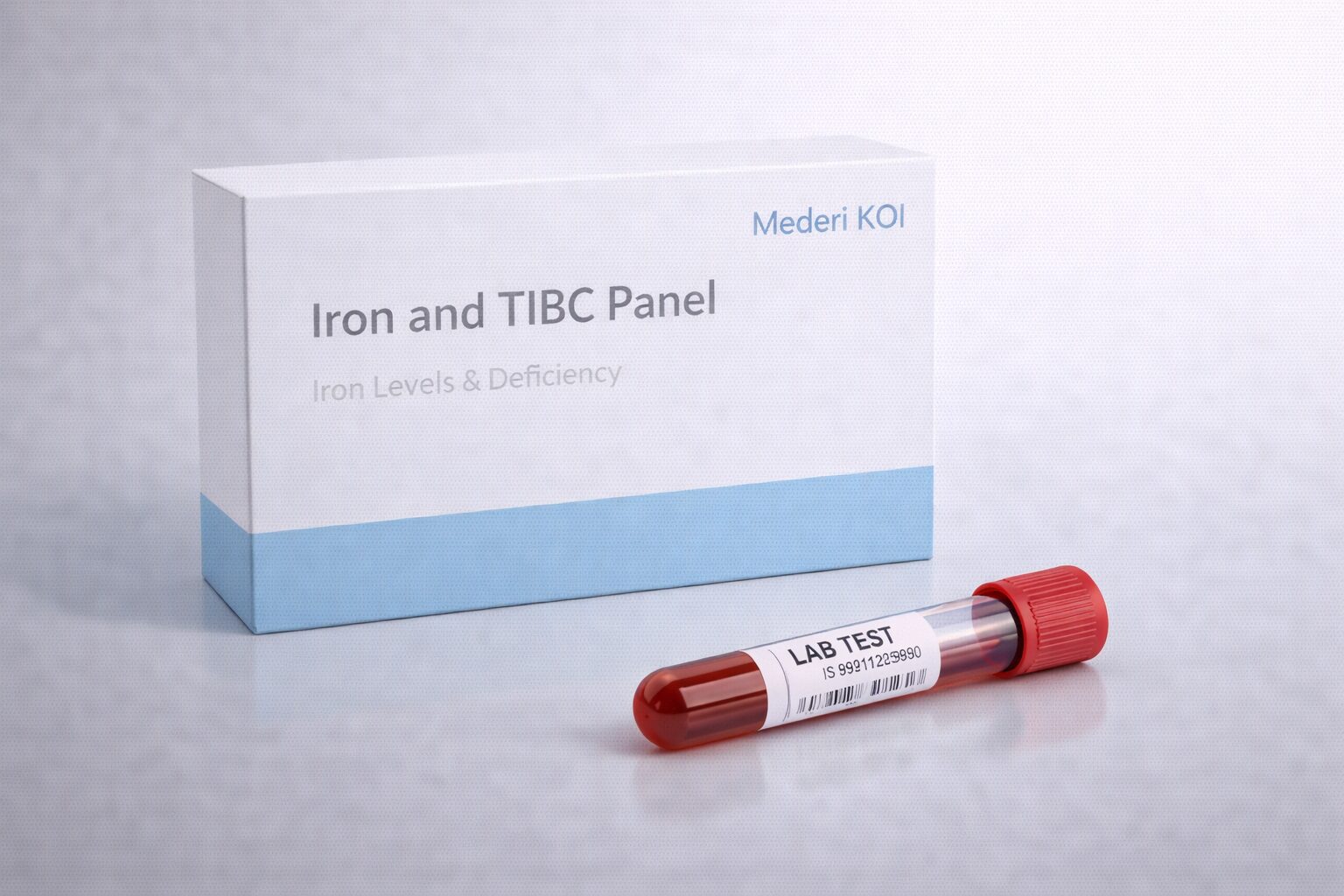
Collection Method: Blood Draw
Specimen Type: Serum
Test Preparation: Sample should be collected in the morning while in a fasting state. Fasting is no food or drinks other than water for at least 8 hours before collection.
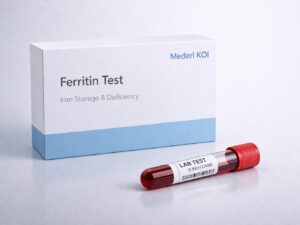
What the Iron, TIBC, and Ferritin Panel Checks For
The Iron, TIBC, and Ferritin Panel evaluates several key aspects of iron metabolism. The total iron test measures the amount of iron circulating in the blood, bound to a protein called transferrin. This reflects the immediate availability of iron for use in the body. The Total Iron Binding Capacity (TIBC) test assesses the blood’s capacity to bind and transport iron, providing insight into how much transferrin is available to carry iron. The iron percent saturation is calculated by comparing the total iron level to the TIBC, indicating how much of the transferrin is currently saturated with iron. Finally, the ferritin test measures the level of ferritin, a protein that stores iron in the body’s tissues. Ferritin levels are a reliable indicator of the body’s iron reserves.
Conditions or Diseases the Iron, TIBC, and Ferritin Panel Can Detect
The Iron, TIBC, and Ferritin Panel is instrumental in diagnosing and monitoring a variety of conditions related to iron metabolism. These include iron deficiency anemia, hemochromatosis, chronic diseases affecting iron levels, and other disorders that impact iron absorption, transport, or storage.
Iron Deficiency Anemia
Iron deficiency anemia occurs when the body lacks sufficient iron to produce adequate hemoglobin, leading to reduced oxygen delivery to tissues. This condition is often caused by inadequate dietary intake, chronic blood loss, or increased iron demands, such as during pregnancy. The panel helps diagnose iron deficiency anemia by revealing low serum iron levels, low ferritin levels (indicating depleted iron stores), and an elevated TIBC (as the body attempts to compensate by producing more transferrin). The iron percent saturation is typically low in this condition.
Hemochromatosis
Hemochromatosis is a genetic disorder characterized by excessive absorption and accumulation of iron in the body. Over time, this iron overload can damage organs such as the liver, heart, and pancreas. The panel can detect hemochromatosis by showing elevated serum iron levels, high ferritin levels (indicating excessive iron storage), and a high iron percent saturation. TIBC may be normal or low in this condition.
Chronic Disease Anemia
Chronic disease anemia, also known as anemia of chronic inflammation, occurs in individuals with long-term illnesses such as infections, autoimmune diseases, or cancer. In this condition, the body’s ability to use iron is impaired, even though iron stores may be normal or increased. The panel typically shows low serum iron levels, normal or elevated ferritin levels (due to inflammation), and a low TIBC. The iron percent saturation is often reduced.
Other Iron-Related Disorders
The panel can also help diagnose conditions such as thalassemia, sideroblastic anemia, and iron poisoning. These disorders may present with unique patterns in the test results, such as abnormal iron distribution or excessive iron accumulation.